
Introduction
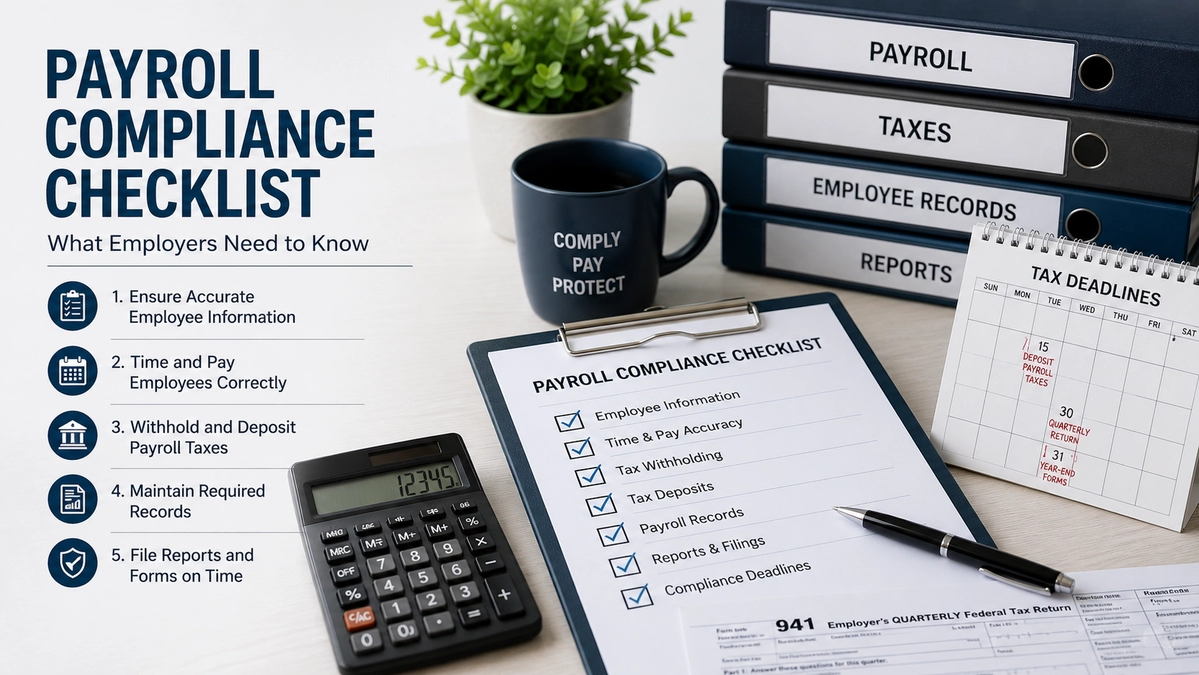
Payroll compliance is one of the most heavily regulated areas of business operations. Mistakes can result in significant penalties, interest charges, and even legal liability. This checklist covers the essential elements employers need to address.
Employee Classification
Correctly classifying workers is critical. Misclassification of employees as independent contractors is a common and costly error.
Key Considerations
- Behavioral control: Does the company direct how work is done?
- Financial control: Are business aspects of the worker's job controlled?
- Relationship type: Is there a written contract? Are benefits provided?
When in doubt, consult with a tax professional or employment attorney.
Wage and Hour Compliance
Minimum Wage
Ensure all employees earn at least the applicable federal, state, and local minimum wage. Remember that some jurisdictions have higher minimum wages than the federal standard.
Overtime
Non-exempt employees must receive overtime pay (typically 1.5x regular rate) for hours worked beyond 40 in a workweek. Some states have additional daily overtime requirements.
Pay Frequency
Most states mandate minimum pay frequencies. Ensure you comply with your state's requirements for how often employees must be paid.
Tax Withholdings and Deposits
Federal Requirements
- Withhold federal income tax based on employee W-4
- Withhold Social Security and Medicare taxes (FICA)
- Pay employer portion of FICA
- Deposit withheld taxes according to your schedule (monthly or semi-weekly)
State and Local Requirements
- State income tax withholding (where applicable)
- State unemployment insurance (SUI)
- Local income taxes (where applicable)
- Disability insurance (required in some states)
Reporting Requirements
Forms W-2
Issue to employees by January 31 each year. File with Social Security Administration by the same date.
Forms 1099
Issue to independent contractors who received $600 or more during the year. Due dates vary by form type.
Quarterly Returns
File Form 941 quarterly to report wages, tips, and taxes withheld.
Unemployment Returns
File quarterly state unemployment tax returns as required.
Record Keeping
Maintain payroll records for at least three years, including:
- Employee name, address, and Social Security number
- Dates of employment
- Hours worked each day and week
- Wage rates and basis
- Total wages paid each period
- Tax withholdings and deductions
- Dates and amounts of tax deposits
New Hire Reporting
Report all new hires to your state's new hire reporting program within the required timeframe (usually 20 days). This supports child support enforcement efforts.
Posting Requirements
Display required federal and state labor law posters in a conspicuous location accessible to all employees.
Year-End Checklist
- Verify employee names and Social Security numbers
- Review taxable fringe benefits
- Confirm all payroll transactions are recorded
- Prepare and distribute W-2s and 1099s
- File required year-end returns
- Reconcile quarterly 941s to annual W-2 totals
When to Seek Help
Payroll compliance becomes increasingly complex as your business grows. Consider professional payroll support when:
- You have employees in multiple states
- You offer benefits that affect tax treatment
- You have complex compensation structures
- You're concerned about compliance risk
- Payroll is consuming too much of your time
Disclaimer
This article is for general informational purposes only and does not constitute legal, tax, or payroll advice. Payroll laws vary by jurisdiction and change frequently. Consult with qualified professionals for guidance specific to your business.