
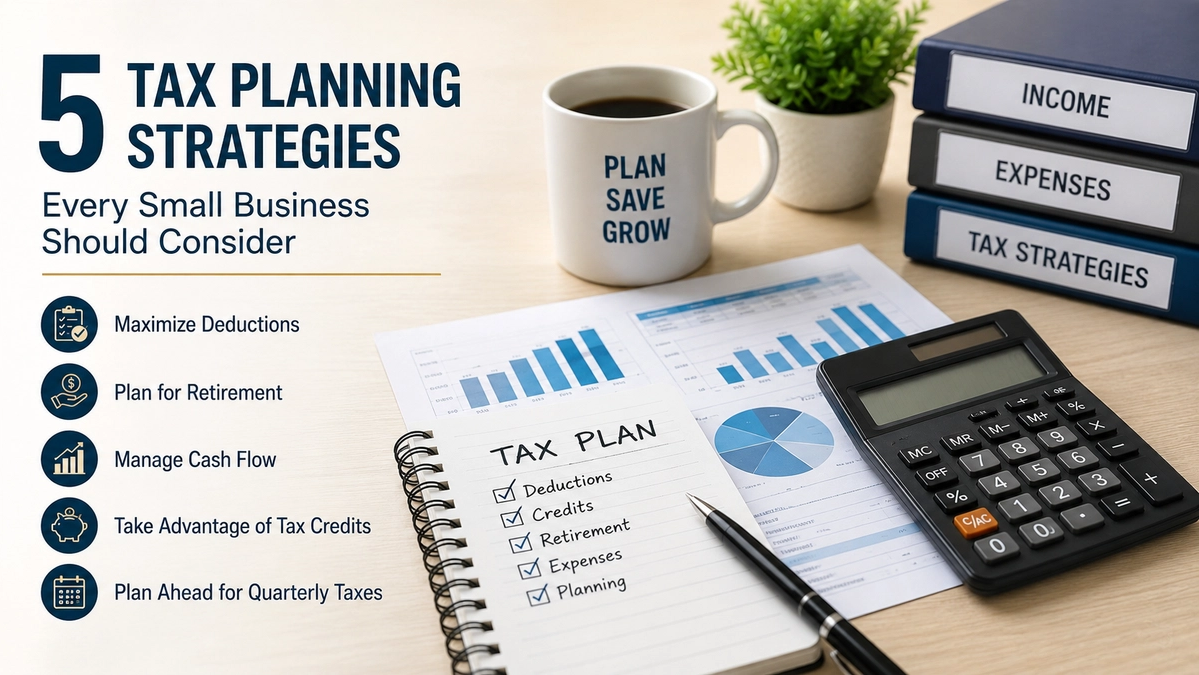
Introduction
Tax planning is one of the most impactful financial activities a small business can undertake — yet many owners only think about taxes once a year during filing season. This reactive approach often leaves money on the table and can result in unnecessary tax liability.
Proactive tax planning, done throughout the year, allows you to make strategic decisions that legitimately reduce your tax burden while keeping you fully compliant with all applicable laws and regulations.
1. Choose the Right Business Entity
Your business structure — sole proprietorship, partnership, LLC, S-Corp, or C-Corp — significantly affects how you are taxed. Each structure has different implications for:
- Self-employment taxes
- Income splitting opportunities
- Deduction availability
- Administrative requirements
As your business grows, your optimal structure may change. Regular review with a tax professional ensures your entity type continues to serve your financial goals.
2. Time Income and Expenses Strategically
The timing of when you recognize income and when you pay expenses can affect your tax liability in a given year. Depending on your circumstances and projections, you may benefit from:
- Accelerating deductible expenses into the current tax year
- Deferring income to the following year
- Making planned equipment purchases before year-end
- Prepaying certain business expenses
This strategy requires accurate projections and an understanding of your marginal tax bracket.
3. Maximize Retirement Contributions
Retirement plans offer some of the most powerful tax deductions available to small business owners. Options include:
- SEP-IRA: Contributions up to 25% of compensation
- Solo 401(k): Higher contribution limits for self-employed individuals
- SIMPLE IRA: Suitable for businesses with employees
- Defined benefit plans: For high-income owners seeking maximum deductions
Contributions reduce your current taxable income while building long-term wealth.
4. Track Every Deductible Expense
Many small business owners underclaim deductions simply because they don't track expenses consistently. Common overlooked deductions include:
- Home office expenses
- Vehicle and mileage costs
- Professional development and education
- Business-related meals and travel
- Software subscriptions and technology
- Professional fees (legal, accounting, consulting)
Implementing a reliable expense tracking system ensures you capture every legitimate deduction.
5. Plan for Estimated Taxes
Underpayment of estimated taxes can result in penalties and interest. Effective estimated tax planning involves:
- Projecting annual income and tax liability
- Calculating required quarterly payments
- Adjusting payments as income fluctuates
- Setting aside funds regularly to cover tax obligations
Working with a professional to establish a quarterly review process helps you stay on track and avoid surprises.
Disclaimer
This article is for general informational purposes only and does not constitute individualized tax, accounting, or financial advice. Tax laws are complex and change frequently. Consult with a qualified tax professional before implementing any tax planning strategy.